Table of contents
Get Started with Kwikly
Get the latest updates, insights, and exclusive content delivered straight to your inbox.
Key Takeaways
- Dental assisting offers a fast path into healthcare with short training, strong job demand, and hands-on patient interaction.
- Requirements vary by state, but most paths include training, possible certification, and real-world clinical experience.
- The role provides flexibility, steady income, and clear opportunities to advance into specialized or leadership positions.
Who This Is For
- People looking to start a healthcare career without committing to a four-year degree.
- Career changers or students who want a practical, patient-facing job with growth potential.
- Anyone exploring flexible or entry-level roles in dentistry and wanting a clear step-by-step path forward.
How to Become a Dental Assistant
If you want to work in healthcare without spending years in school, dental assisting is one of the most practical routes in. The training is short, the demand is strong, and you get to work directly with patients every single day. This guide walks you through exactly what it takes to become a dental assistant, from checking your state’s rules to landing your first job and building a long-term career.
Is Dental Assisting the Right Career for You?
Dental assisting is a patient-facing healthcare role that combines clinical work with some administrative duties. You work alongside dentists and hygienists, helping keep the office running and patients comfortable. It offers solid job security, flexible scheduling options, and a clear path into the workforce without a four-year degree.
According to the Occupational Outlook Handbook published by the Bureau of Labor Statistics, dental assistant jobs are projected to grow around 6 percent from 2024 to 2034, which is faster than average compared to other occupations. There are roughly 52,900 openings each year due to growth, turnover, and retirements. The median annual wage for dental assistants in May 2024 was about $47,300, though actual pay varies by state, experience, and the type of practice you work in.
Why people choose this career:
- You work directly with patients, helping them feel at ease during procedures
- The work mixes hands-on clinical tasks with some front-desk responsibilities
- There are clear paths to grow into lead assistant, office manager, dental hygienist, or even dentist with additional education
This career tends to it people who are:
- Detail-oriented and good at following step-by-step protocols
- Calm under pressure, especially around anxious or uncomfortable patients
- Comfortable with hands-on work in close physical proximity to others
- Interested in health and science topics
- Genuinely enjoy helping people
If that sounds like you, keep reading.
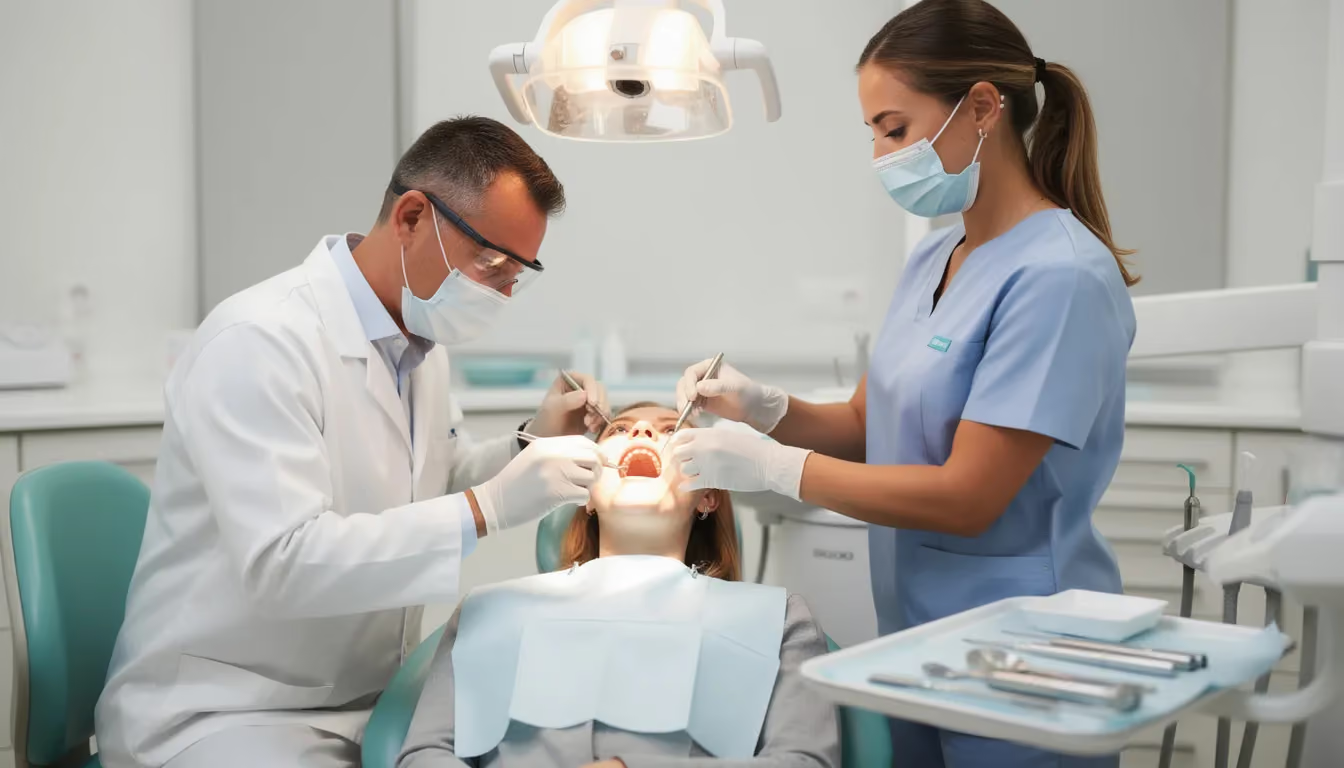
What You'll Actually Be Doing as a Dental Assistant Every Day
Dental assistants pretty much keep the whole place running, working closely to assist dentists during exams, and patient treatments. You're the one making sure everything flows smoothly between patients, helping out the dentist when things get busy, and a lot of times, you're the person who helps nervous patients feel okay about being there.
Here's what you'll be doing on the clinical side:
- Getting treatment rooms ready before each patient shows up
- Setting up instrument trays and preparing dental materials like impression compounds, cements, and filling materials
- Handing instruments to the dentist and helping out during fillings, extractions, and other procedures
- Working the suction and retractors while they're doing treatment
- Taking digital x-rays and dental radiographs
- Making sure instruments are sterilized and following all the infection control stuff
- Pouring impressions and handling basic lab work
- And here's the administrative stuff you'll handle, especially when preparing for peak seasons and the year end:
- Saying hi to patients and updating their medical history
- Setting up appointments and keeping track of recall systems
- Checking insurance info and answering phones
- Writing notes in electronic health records
Just so you know, what you can do really depends on where you live. Some states let dental assistants place sealants, apply fluoride, or do coronal polishing if you get extra training. Others keep you doing basic chairside help until you get specific credentials.
Most dental assistants work in regular general practices, but you might end up in a specialty place like orthodontics, oral surgery, periodontics, or pediatric dentistry. Each one has its own vibe and pace. If you're in a busy general office, expect patients back-to-back, quick room turnovers, and lots of talking with the dental hygienist, dentist, and front-desk people.
Figure Out What Your State Actually Requires
Each state sets its own educational requirements for dental assistants, which can range from on-the-job training to completing an accredited dental assisting program and passing exams.
Before you sign up for any program or start putting in job applications, you need to know what your state actually wants from you. Each state does dental assisting rules their own way, so what you'd do in California or Massachusetts is going to look totally different from what you'd do in Texas or Florida.
Most states go with one of three basic ways:
For example, in some states you can start work immediately with only on-the-job training, while in others you need a credential like Registered Dental Assistant (RDA) or Expanded Functions Dental Assistant (EFDA) before performing certain tasks.
Before enrolling in any program, you should:
- Visit your state board of dentistry or dental examiners website for current rules
- Note whether your state uses titles like Dental Assistant, RDA, EFDA, or Licensed Dental Assistant (LDA)
- Check specific requirements for taking radiographs, applying sealants, or monitoring nitrous oxide
- Confirm whether your state recognizes national credentials from the Dental Assisting National Board
Understanding state rules early helps you avoid paying for unnecessary training and ensures you become eligible for the duties you actually want to perform.
Education and Skills Needed for Radiation Health and Infection Control
Nearly every state and employer expects at least a high school diploma or GED as the minimum requirement to start a dental assisting career. If you are still in high school, certain classes will give you a head start.
Helpful high school subjects:
- Biology and chemistry for understanding anatomy and dental materials
- Health sciences for exposure to clinical concepts
- Basic algebra for radiography calculations and medication dosing
Beyond formal education, dental offices look for a specific mix of soft skills and practical abilities.
Core soft skills dental practices value:
- Clear communication with patients and team members
- Empathy and a calming presence for anxious patients
- Professionalism and reliability
- Strong teamwork and the ability to anticipate what the dentist needs
- Time management to keep the schedule on track
- Attention to detail when charting, labeling radiographs, or following sterilization protocols
Physical and practical demands to consider:
- Standing for extended periods and moving quickly between operatories
- Fine motor coordination when handling small instruments
- Comfort working in close physical contact with patients
- Ability to lift or position equipment as needed
Modern dental offices also expect basic computer literacy. You will use practice management software, digital charting systems, and digital x-ray equipment daily. Familiarity with these tools makes you more attractive to employers.
If you are still exploring, consider job shadowing at a local dental office, volunteering at a community clinic, or joining a health sciences club. Early exposure helps you confirm this career fits before investing in training.
Dental Assistant Training in Radiation Health and Safety
There is no single path to becoming a dental assistant. The right route depends on your state’s rules, your budget, and how quickly you want to start working.
Be cautious of non accredited programs, as they may not qualify you for certification exams or state licensure and can limit your job opportunities. Most certificate or diploma programs take 6 to 9 months to complete. Some schools offer associate degrees that take about 18 to 24 months.
Common curriculum topics include:
- Dental anatomy and terminology
- Chairside assisting techniques
- Radiography and radiation health and safety
- Infection control and sterilization
- Dental materials and impressions
- Medical emergencies in the dental office
- Front office procedures and patient communication
Most accredited programs include a clinical externship where students prepare for real-world work. You will typically spend 120 to 300 hours in actual dental offices, assisting with real patients under supervision. This hands on training is where you build the practical skills that make you job-ready.
On-the-job training is still an option in many states. Some dentists hire dental assistants with little or no experience and train them directly. This can be a faster, lower-cost way to enter the field, though your scope of practice may be limited until you complete additional credentials.
If you plan to pursue national certification like the Certified Dental Assistant (CDA) credential, verify that any program you consider is accredited by CODA (Commission on Dental Accreditation). Graduating from an accredited program often qualifies you to sit for DANB exams.
Become a Certified Dental Assistant (CDA, RDA, EFDA)
Certification is not required everywhere, but it almost always leads to higher pay, more responsibility, and better job prospects. Research suggests certified dental assistants earn roughly 10 to 20 percent more than their non-certified peers.
The most recognized national credential is the Certified Dental Assistant (CDA) from the Dental Assisting National Board (DANB). Earning your CDA typically involves passing three component exams:
Many states recognize or require DANB exams even if you are not pursuing the full CDA. For example, you might need to pass the RHS exam before you can legally take dental radiographs in your state, or the ICE exam to demonstrate competency in infection control.
State-specific credentials like RDA, LDA, or EFDA often require:
- Completion of a CODA-accredited program
- Passing state or national exams
- Current CPR certification
- Supervised clinical hours or work experience
Expanded functions credentials allow you to perform complex duties like placing and carving restorations, taking final impressions, or applying pit and fissure sealants. These roles command higher pay and make you more valuable to busy practices.
Once certified, you will need to maintain your credentials through continuing education. Most certifications require a set number of CE hours every one to two years. This lifelong learning keeps you current on infection control guidelines, new techniques, and changing regulations.
Get Real-World Experience in Dental Offices
Hands-On Training in Infection Control and Infectious Disease Prevention
Classroom learning gives you the foundation, but hands on training in real clinical settings is where everything comes together. This is where you learn to work efficiently, communicate with anxious patients, and apply what you studied under the pressure of a busy schedule.
Most dental assisting programs include externships in general or specialty practices. You will assist with real patients under supervision, building confidence with each procedure.
Other ways to gain experience:
- Entry-level sterilization technician or front-desk roles that expose you to office flow
- Part-time work as a dental assistant trainee in states that allow it
- Volunteering at community dental clinics or health fairs
- Job shadowing experienced dental assistants to observe different practice styles
During your first few weeks in any office, expect to focus on:
- Sterilizing instruments and maintaining infection control protocols
- Setting up and breaking down treatment rooms between patients
- Charting and updating the patient’s medical history
- Assisting with simple procedures like cleanings and exams
- Learning the office’s specific software and workflows
Consider keeping a simple skills log to track your progress. Note when you take your first set of bitewing x rays, assist with your first extraction, or handle a nervous patient on your own. This record helps during job interviews and shows employers you are serious about growth.
Use this stage to build relationships with mentors. Ask questions, observe how different dentists prefer to work, and learn the unwritten rules that keep an office running smoothly. The connections you make during training often lead to job offers.
Find Your First Dental Assistant Job
New dental assistants are in demand, especially in busy metro areas, growing suburbs, and practices that struggle with staffing gaps. The job market is on your side.
Practical job search steps:
- Build a focused resume highlighting your clinical skills, externship experience, and any certifications
- Write a brief cover letter tailored to each office, explaining why you want to work there specifically
- Organize references from instructors, supervising dentists, or externship coordinators
- Prepare a list of your completed competencies and any continuing education courses
Where to look for jobs:
- Local private dental practices and group practices
- Large dental service organizations (DSOs) like Heartland Dental or Smile Brands
- Community college career centers and job boards
- State dental association websites
- Online job platforms and dental-specific staffing apps
Preparing for interviews:
- Review common questions about infection control procedures, handling difficult patients, and your experience during training
- Be ready to describe specific situations from your externship
- Ask thoughtful questions about training, patient volume, and growth opportunities
When evaluating job offers, look for a supportive environment where you can continue learning. A clear job description, reasonable patient schedule, and willingness to train you on new procedures matter more in your first role than top dollar pay.
Many dental assistants start in general practice to build a broad skill set. Once you have a solid foundation, you can specialize in areas like orthodontics, oral surgery, or pediatric dentistry if those interest you.
Consider Temporary, Part-Time, and Flexible Work With Platforms Like Kwikly
Not every dental assistant wants or needs a traditional full-time job. Many professionals choose flexible options to fit around school, family obligations, or a desire for variety.
Kwikly is a modern dental staffing app headquartered in Minnesota that connects dental assistants with offices across major U.S. cities for temporary and permanent shifts. It provides staffing solutions for DSOs like Heartland Dental and Smile Brands, giving you access to a wide network of practices.
How Kwikly works for dental assistants:
- Create a profile through the app or website
- Complete a streamlined vetting and virtual interview process
- Once approved, browse open shifts in nearby offices and accept the ones that fit your schedule
- Show up, do great work, and get paid
Kwikly offers same-day pay through Kwikly Wallet, which appeals to new assistants who want quicker access to earnings while building experience. There are no shift minimums, so you control exactly when and how much you work.
Using a platform like Kwikly lets you test different practice types before committing to a permanent job. You might work in a pediatric office one day, a general practice the next, and an oral surgery clinic later that week. This exposure helps you figure out what kind of dental office fits you best.
Kwikly supports both brand-new graduates and experienced dental assistants. You get live support from a real team, clear shift details before you walk in, and the flexibility to build your career on your own terms.

Where Dental Assistants Work and Typical Schedules
Most dental assistants work in privately owned dental practices or group practices, but the options go well beyond that.
Common work settings:
- General dentistry offices (the most common)
- Orthodontic practices
- Pediatric dentistry offices
- Periodontal and endodontic specialty practices
- Oral and maxillofacial surgery centers
- Community health centers and federally qualified health clinics
- Dental schools and teaching hospitals
Most assistants work full-time, typically four or five days per week. Schedules often start early in the morning and may include evening hours or Saturdays depending on the practice. Part-time roles are also common, especially in multi-location practices where assistants split time between offices.
DSOs and larger groups increasingly use enterprise staffing platforms like Kwikly to coordinate assistants across multiple locations. This creates additional opportunities for flexible work if you prefer variety or need a non-traditional schedule.
Work environment expectations:
- Professional attire or clinical scrubs depending on office policy
- Strict adherence to infection control standards and OSHA requirements
- A patient-centered culture focused on comfort and oral health
- Regular communication with the dentist, dental hygienist, and front office team
The physical environment is generally clean, well-lit, and climate-controlled. You will spend most of your day on your feet, moving between operatories.
How Long It Takes to Become a Dental Assistant
The timeline to become a dental assistant ranges from a few weeks to about two years, depending on your chosen path and state requirements.
If your state allows on-the-job training, you might start working within a few weeks of being hired. Your duties will likely be limited at first, expanding as you complete required training in areas like radiography and infection control.
Formal programs take longer but qualify you for a broader scope of practice right out of the gate. Many students prepare for and pass DANB certification exams before or shortly after graduation.
Planning tip: Decide when you want to be working full-time, then work backward. If you need to be earning income within six months, a certificate program or OJT might make the most sense. If you want a deeper education and do not mind a longer timeline, consider an associate degree.
Even after you start working, your skills and responsibilities continue to grow during your first one to two years on the job. The learning does not stop at graduation.
Salary, Benefits, and Job Outlook
The median annual wage for dental assistants in May 2024 was roughly $47,300, which works out to about $22.74 per hour. The top 10 percent of earners made more than $61,780 per year.
Factors that impact pay:
- Geographic location (coastal cities and high cost-of-living states pay more)
- Years of experience in the dental field
- Specialty setting (oral surgery and orthodontics often pay above general practice)
- Certification status (CDA holders average around $26 per hour vs $22.50 for non-certified)
- Full-time versus part-time or temp work
States like Minnesota, Washington, Alaska, and Massachusetts report median wages well above the national average. For example, Minnesota dental assistants earn a median of about $31 per hour.
Common benefits in full-time roles:
- Health insurance and dental coverage
- Paid time off and holidays
- Retirement plans with employer matching
- Paid continuing education and professional development
- Staff discounts on dental treatment
The job outlook remains strong. With projected growth of around 6 percent through 2034 and approximately 52,900 openings annually, demand for qualified dental assistants is not slowing.
Before enrolling in a program, check state-level salary data and local job postings to understand what you can realistically expect in your area.
Quick comparison with similar roles:
| Role | Typical Training | Median Pay (2024) |
|---|---|---|
| Dental Assistant | 9-12 months | $47,300 |