Table of contents
Get Started with Kwikly
Get the latest updates, insights, and exclusive content delivered straight to your inbox.
Dental Assistant Interview Questions with Tips on What to Expect and What to Say
Getting that dental assistant job starts with knowing what hiring managers actually want to hear. This guide walks you through real interview questions, practical ways to answer them, and prep steps you can use right away.
Here's what we're covering:
- The most common interview questions you'll face
- Behavioral and clinical questions that always come up
- What you should ask before you say yes
- What to wear and how to show up
- How temping with Kwikly can help you get interview-ready experience
This is made for U.S. dental assistant roles in 2026. Whether you're just starting, experienced, or working as a temp, this page has you covered. Use it as your checklist the week before your interview. Read it once, jot down your answers, then practice saying them out loud.
Introduction to Dental Assisting
Dental assisting is a dynamic and rewarding career that puts you at the heart of patient care in a dental practice. As a dental assistant, you play a crucial role in supporting dentists and ensuring that every patient receives the best possible experience during their visit. The dental assistant job involves a wide range of responsibilities, from preparing patients for dental procedures to assisting the dentist chair-side and ensuring all tools and materials are ready for each appointment.
If you’re interested in a career in dental assisting, it’s important to understand the variety of job duties you’ll take on. These can include helping with dental procedures, maintaining a clean and organized workspace, and updating patient records. Dental assistants are often the first point of contact for patients, helping them feel comfortable and informed about their treatment.
To succeed in a dental assistant position, you’ll need a mix of technical skills, attention to detail, and a genuine interest in helping others. Qualifications for this role typically include completing a dental assisting program, earning relevant certifications, and developing strong communication skills. Whether you’re just starting or looking to advance in the dental field, being a dental assistant offers a fulfilling path with opportunities to grow and make a real difference in patients’ lives.
Understanding the Dental Assistant Job
The dental assistant job is a cornerstone of any successful dental team, requiring a unique blend of technical know-how, administrative abilities, and strong interpersonal skills. As a dental assistant, your responsibilities go far beyond simply assisting with dental procedures; you’re also a key player in keeping the dental practice running smoothly.
On a typical day, you might find yourself preparing exam rooms for upcoming procedures and ensuring all equipment is properly sterilized and ready for use. Administrative responsibilities are a big part of the role. Your ability to handle tasks efficiently helps create a seamless experience for everyone in the office.
Interpersonal skills are especially important in this position. You’ll interact with patients of all ages and backgrounds, often helping to ease their nerves and explain procedures in a way that makes them feel comfortable. Being able to communicate clearly and compassionately is essential for building trust and delivering excellent patient care.
A strong understanding of dental procedures and HIPAA guidelines is also critical. You’ll need to be familiar with the most important aspects of infection control, patient privacy, and the specific protocols used in the dental field. The best dental assistants are those who can juggle multiple responsibilities, adapt to changing situations, and always put patient safety and comfort first.
By mastering these skills and responsibilities, you’ll become an invaluable member of the dental team and set yourself up for a successful and rewarding career as a dental assistant.
What to expect when you're interviewing
Most dental assistant interviews run 20 to 45 minutes. You’ll get general questions, behavioral stuff, and some technical ones. It usually starts with small talk, then “tell me about yourself,” which is notable for its open-ended nature. This means you should focus on providing a comprehensive, professional-focused response rather than personal details. The interview then moves into your background, what you can do clinically and administratively, some scenario questions (at this point, you may be asked how you would handle specific situations or teamwork challenges), and wraps up with questions from you.
In 2026, lots of practices do it in two steps. First, there’s a 15 to 20-minute phone or video call about your availability and basic credentials. Then you’ll go in person, where you might tour the office, meet the dentist, or watch a procedure.
You’ll probably talk to the practice manager, lead assistant, or lead hygienist. At DSOs and bigger groups, you might meet several people. They’re looking for proof that you’re reliable, can communicate well, know infection control, are comfortable with software like Dentrix or Eaglesoft, and fit in with their team. It’s important to highlight your professional experience during the interview, as this demonstrates your qualifications and readiness for the dental assistant role.
Temp and per diem roles usually have shorter interviews, but you’ll still get similar questions about your skills, when you can work, and how professional you are.
Common dental assistant interview questions
These questions show up in pretty much every dental assistant interview. Here’s how to give strong answers that get you noticed.
Tell me about yourself. Stick to your professional story. Talk about your schooling, certifications, how long you’ve worked in dental, your key skills, and why you love working with patients. Be sure to focus on the skills needed for the dental assistant role, such as communication, technical abilities, and attention to detail. Keep it between 60 to 90 seconds.
Why did you choose to become a dental assistant? Talk about your interest in healthcare, that you like hands-on work, helping patients feel comfortable, and enjoying the detail-oriented stuff that comes with dentistry.
Why do you enjoy being a dental assistant? Get specific here. Maybe you helped a nervous patient get through treatment, were part of a smile makeover, or just love being part of a tight dental team. Mention that you enjoy working with both patients and the dental team, which helps create a positive environment, contributes to patient comfort, and brings professional fulfillment. The best feeling is seeing patients leave happy and confident after their procedures, knowing you played a part in their transformation, is incredibly rewarding and brings real job satisfaction.
What dental experience do you have? Go through the types of practices you’ve worked at (general, pediatric, ortho, oral surgery), procedures you’ve helped with, and any expanded functions or radiology training you’ve had. Highlight any training, internships, or certifications you have completed. If you have experience with restorative or cosmetic procedures, mention your work with teeth, such as assisting with crowns, veneers, or braces.
What are your greatest strengths as a dental assistant? Pick two or three things you’re good at, like staying organized, talking to patients chair-side, or infection control. Give a quick example from your past work for each one. Add that attention to detail is vital for following procedures and protocols accurately, ensuring patient safety and quality care.
What is your greatest weakness? Be real, but pick something manageable, like being nervous about admin tasks on the phone when you started. Then talk about what you’re doing to get better, like taking courses or using checklists.
Why do you want to work at this practice? Do your homework first. Check out their website, reviews, and social media. Connect your answer to their values, the patients they see, or their technology. Don’t just talk about the commute or pay.
How would you prepare for a patient’s arrival? Talk about checking the schedule, looking at medical history, setting up the tray and exam rooms, making sure everything’s sterilized, and greeting the patient with a smile. Emphasize the importance of making patients feel comfortable—share a specific example, such as offering reassurance to a nervous patient or explaining procedures in a calming way, to highlight your soft skills.
How do you approach working with dental patients? Include empathy, explaining procedures in simple terms, checking that they’re comfortable, and adjusting how you talk for kids, seniors, or anxious patients. Demonstrate professionalism and a positive attitude, especially when working with anxious patients, to help them feel at ease.
How do you handle a difficult work situation with a coworker or dentist? Use a quick STAR example (Situation, Task, Action, Result) that shows you staying calm, communicating respectfully, and keeping patient care as your priority. The STAR method is a recommended way to structure your answer for behavioral interview questions.
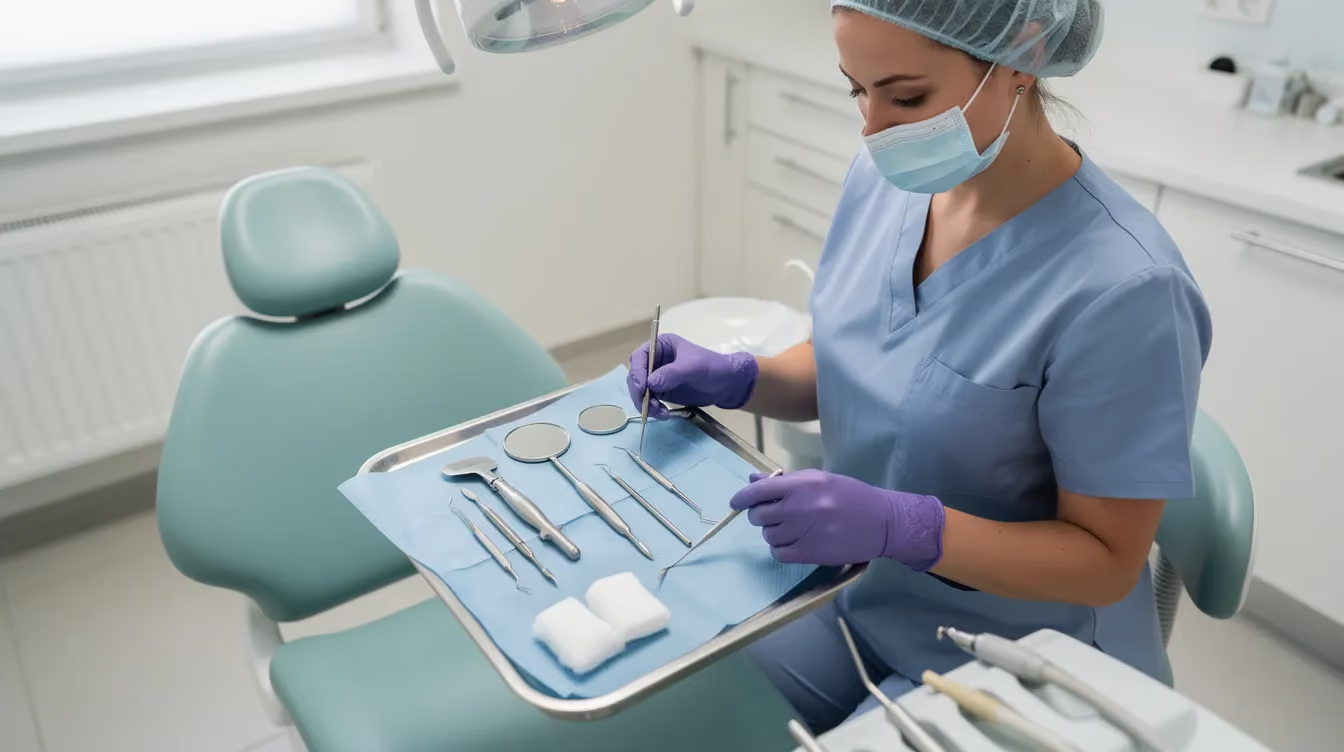
Common dental assistant interview questions focus on patient care, technical skills, handling high-stress situations, and teamwork. Hands-on expertise and understanding of safety protocols are often evaluated. Be ready to provide examples of how you have calmed patients down in the past during your interview. It's also important to highlight your experience working with different patient populations. Asking insightful questions at the end of the interview can demonstrate your understanding and interest in the dental assistant role.
Behavioral and patient-care questions for dental assistants
Many hiring managers now use behavioral questions to see how you react under pressure. 20-40% of adults have dental anxiety so expect questions about handling nervous patients.
How do you work with anxious or fearful patients? Describe specific techniques: explaining each step, offering stop signals, using distraction, and pacing slower. Give an example from a real patient encounter.
Tell me about a time you helped a nervous child or special needs patient. Choose a story that shows patience, clear communication with parents and doctor.
What would you do if a patient complained of pain during a procedure? Emphasize patient advocacy, pause to call the dentist, check anesthetic, and document per hipaa guidelines.
Describe a time you had to juggle multiple urgent tasks in the office. Show prioritization skills, teamwork and keeping sterilization and safety first even when scheduling gets crazy.
How do you manage stress during a super busy day? Mention reviewing the schedule at the beginning of the day, using written checklists, staying in touch with the front desk and taking short mental resets.
How do you make sure you don’t forget something during a busy day? Emphasize routines, checklists for opening and closing, practice management software tasks and double checking lab cases and sterilization cycles.
Clinical and technical dental assistant interview questions
Even entry level interviews will ask about sterilization, radiology and basic chair-side procedures especially in states with expanded function roles.
Can you describe your process for sterilizing and disinfecting instruments? A good answer will mention PPE, transporting contaminated instruments, ultrasonic cleaners, rinsing, packaging, autoclave at proper temps, biological indicators and logging cycles.
How do you prep the exam room before and after each patient? Talk about surface disinfection, barriers, setting up the right trays, checking supplies and safe disposal of sharps and single use items.
What is your experience with taking and processing dental X-rays? Include types of radiographs (bitewings, periapicals, panoramic), software familiarity, radiation safety, lead aprons and state specific certifications.What do you do when seating a patient in the chair? Mention greeting by name, updating medical history, positioning correctly, bib, explaining what will happen and making sure they’re comfortable.
What experience do you have with laboratory tasks? Cover alginate impressions, pouring and trimming models, bleaching trays or temporary crowns and communicating with outside labs.
How do you handle dental emergencies? Strong answers show calm triage, knowing when to call the dentist and clear instructions for urgent care when necessary.
What practice management or imaging software have you used? List specific systems like Dentrix, Eaglesoft, Open Dental, Dexis or Carestream. Emphasize your ability to learn new platforms quickly since technology is always changing.
The dental practice and your role
When preparing for a dental assistant interview, one of the most important steps is understanding the dental practice you’re applying to and how you’ll fit into their team. Taking the time to research the practice’s values, mission, and approach to patient care allows you to tailor your answers and demonstrate genuine interest in the role. It shows the interviewer that you’re not just looking for any job but that you want to be part of their team.
As a dental assistant, you play a key role in keeping the practice running smoothly. You’ll work closely with the dentist and other team members, supporting both clinical and administrative tasks. On the clinical side, this includes assisting during procedures, preparing exam rooms, sterilizing instruments, and ensuring everything is ready for each patient. On the administrative side, responsibilities often involve scheduling appointments, updating patient records, handling billing, and managing day-to-day office systems.
Strong interpersonal skills are essential in this role. You’ll interact with patients of all ages, including those who may feel anxious about dental visits. Being able to communicate clearly and compassionately, whether you’re explaining procedures, answering questions, or helping someone feel at ease, is a critical part of delivering excellent patient care. You’ll also need to communicate effectively with the dentist and your team to keep everything running efficiently.
Computer skills are increasingly important in modern dental practices. Many offices rely on specialized software for scheduling, recordkeeping, and administrative tasks. Being comfortable with technology and showing a willingness to learn new systems can set you apart as a candidate.
Another key responsibility is understanding and following HIPAA guidelines. Since you’ll handle sensitive patient information, it’s important to demonstrate a strong commitment to privacy and confidentiality.
During your interview, be prepared to talk about your education, training, and relevant experience. You may be asked about your knowledge of dental procedures, how you handle administrative responsibilities, and how you manage challenges in a fast-paced environment. Employers want to see that you can stay organized, prioritize tasks, and communicate effectively with both patients and team members.
Questions to ask your interviewer as a dental assistant
Interviewers always ask if you have questions for them. Thoughtful questions set you apart as a strong candidate. Prepare 4-6 and choose 2-3 based on what has already been discussed.
- What does a typical day look like for a dental assistant here? This helps you understand schedule pace, number of patients and how the team communicates.
- How is success measured for dental assistants in their first 90 days? This reveals priorities like punctuality, productivity or patient satisfaction.
- What challenges do new assistants face at this office? This gives you honest insight into training and workflow so you can prepare.
- How does your practice support CE for assistants? Tie this to your interest in radiology, expanded functions or front office cross training.
- Can you tell me more about the team I would be working with? This reveals culture, turnover and collaboration between dentist, hygienists and assistants.
Don’t ask about pay and time off in the first interview unless the employer brings it up. Focus on clinical expectations and team culture instead.

How to prepare for a dental assistant interview
Follow this step-by-step prep plan in the week before your interview.
Research the practice. Check the website, Google reviews, social media, and provider bios. Know their services, patient demographics and company values.
Review the job description. Highlight required skills like radiology, bilingual abilities or expanded functions. Align your answers with those needs and job duties.
Refresh core knowledge. Review infection control guidelines, basic procedure steps (restorative, extractions, prophy, endo assist), and HIPAA basics for a dental setting.
Practice answers out loud. Use a mirror or record yourself. Focus on 60 to 90 second answers for key questions.
Prepare your portfolio. Bring 2 to 3 printed resumes, copies of certifications like radiology permits or DANB credentials, reference contact info and letters of recommendation.
Plan logistics. Confirm the address, parking and route. Arrive 10 to 15 minutes early and silence your phone before entering.
Follow up. Send a short, specific thank-you email within 24 hours mentioning one or two topics from the conversation and reiterating your interest.
What to wear, body language and professional etiquette
Appearance and nonverbal communication is key in a clinical setting.
Interview attire. Business casual: clean slacks or skirt, blouse or button-down shirt and closed-toe shoes. If the practice says scrubs, wear solid, wrinkle-free ones.
Grooming and hygiene. Clean nails and short, minimal fragrance, tie back long hair and no distracting jewelry.
Body language. Polite greeting, comfortable eye contact, sit up and don’t cross your arms or check your phone.
Communication style. Speak clearly and no slang. Listen fully to questions before you answer. Practice active listening by paraphrasing complex questions.
Professional etiquette. Address people by name, treat all staff with respect including the front desk and don’t speak negatively about previous employers.
Entry-level vs experienced dental assistant interview tips
Interviewers will expect different examples based on your experience level.
For entry-level assistants: Focus on externships, dental assisting school labs, volunteer work and transferable skills from customer service or healthcare jobs. Be honest about what you don’t know while emphasizing fast learning, reliability and positive feedback from instructors. Also, mention any training, internships, or certifications you have completed to show your readiness for the position.
For experienced assistants: Emphasize range of procedures you’ve assisted with, cross-training with front office administrative tasks, mentoring junior staff and adapting to new technology or protocols over time. Highlight your strong work ethic, as managing both clinical and administrative tasks efficiently is essential for dental assistants.
Highlight certifications. Mention up-to-date CPR, radiology permits, nitrous monitoring and expanded function training with dates when relevant.
Discuss pay and schedule expectations. Wait until later in the process or when the employer brings it up. Be ready with a realistic range based on 2026 local averages which are around 21 to 25 dollars per hour depending on location and qualifications.
Finally, during your interview, express your willingness to learn and adapt to the office culture.
Using Kwikly to build interview-ready experience
Kwikly is the largest dental staffing platform in the United States, connecting dental assistants with short-term and long-term work in cities like Minneapolis, Dallas, Atlanta, Phoenix and more. We partner with major DSOs like Heartland Dental and Smile Brands, giving you access to all the tools you need to grow your career.
Many assistants use Kwikly to gain experience in different practice types. Working in DSOs, private practices and pediatric offices gives you concrete examples to talk about in interviews. You get familiar with different patient populations and software systems.
Kwikly’s vetting and virtual interview process itself is low-pressure practice. You get comfortable answering common questions before the stakes feel high.
The Kwikly app lets you choose shifts that fit your schedule and get same-day pay through Kwikly Wallet. This makes it easier to earn while searching for a full-time dental assistant job.
Here’s an example: A 2025 graduate takes several temp assignments through Kwikly, gets exposure to general dentistry, orthodontics and pediatric offices. When they sit down for a full-time job interview they can describe specific situations where they handled anxious children, learned new software quickly and adapted to different office workflows.
Working in multiple offices improves adaptability, builds computer skills across platforms and develops interpersonal skills with different patients. These are the qualities interviewers are looking for in the best candidate who can hit the ground running.
Whether you want full-time temping or a long-term home office, building experience through Kwikly makes your interview answers more specific, credible and compelling.

Final checklist before your dental assistant interview
Review this checklist the night before or morning of your interview.
- Confirm interview time, location, and interviewer name
- Double-check email or text instructions from the office
- Print at least two resumes and gather licenses, certifications, and portfolio documents
- Review 8 to 10 core questions and mentally outline key points for each answer
- Revisit notes on the practice services, values, and hours so you can explain why you are a good fit
- Lay out clothes, plan transportation, and set an alarm allowing arrival 10 to 15 minutes early
- Prepare two to three thoughtful questions about expectations and team culture
Fingers crossed for your next interview. And if you want more experience before that conversation happens, consider picking up shifts through Kwikly. The more shifts you work, the more helpful stories you have to tell. Every interview feels less like a test and more like a choice when you have real work experience backing you up.