Table of contents
Get Started with Kwikly
Get the latest updates, insights, and exclusive content delivered straight to your inbox.
Key Takeaways
- Dental assistants and dental hygienists play different roles: assistants support procedures and office workflow, while hygienists focus on preventive care and patient education.
- The education path, pay, and independence level vary significantly, with hygienists requiring more schooling and licensure but earning higher wages.
- Both careers offer strong job growth, flexible work options, and multiple pathways for advancement or specialization.
Who This Is For
- People deciding between becoming a dental assistant or a dental hygienist and wanting a clear side-by-side comparison.
- Students or career changers who need to understand training time, salary potential, and daily job duties before committing to school.
- Dental professionals exploring flexible work options, career growth, or transitioning between roles.
Dental assistant vs Dental hygienist
If you’re looking into healthcare careers in dentistry, you’ve probably come across two roles that sound similar but are actually quite different. Both dental assisting and dental hygiene are essential supporting roles in dentistry, each with distinct career paths, education requirements, and job duties. A dental assistant works alongside the dentist, setting up treatment rooms, passing instruments during procedures, handling all the administrative tasks, sterilizing dental equipment and making sure patients are comfortable before and after treatment.
A dental hygienist on the other hand, focuses on preventive care. They do teeth cleanings, take and interpret x-rays, apply fluoride treatments and educate patients on how to take care of their oral health between visits. Hygienists work more independently, manage their own patient appointments and spend 45-60 minutes with each patient they see.
Both roles are crucial to any dental practice and both are in high demand across the US. According to the Bureau of Labor Statistics' recent data, there are over 318,000 dental assistants and about 213,000 dental hygienists currently employed. The employment of dental assistants is projected to grow by 8 percent by 2031, while the employment of dental hygienists is expected to grow by 9 percent by 2031. Dental hygienists are expected to have about 16,300 job openings between 2022 and 2032. This projected job growth means both Dental Assistants and Dental Hygienists are experiencing strong job growth, with Hygienists having slightly stronger long-term prospects due to increased clinical scope.
Most dental hygienists have earned an associate's or bachelor's degree in dental hygiene, which typically takes about three years to complete.
For dental professionals looking for flexibility, platforms like Kwikly connect both dental assistants and dental hygienists with offices that need coverage. Whether you want to pick up extra shifts, work full-time as a temp, or try out different practice environments, Kwikly makes it simple to find opportunities that fit your schedule.
Typical job duties: Dental assistant vs dental hygienist
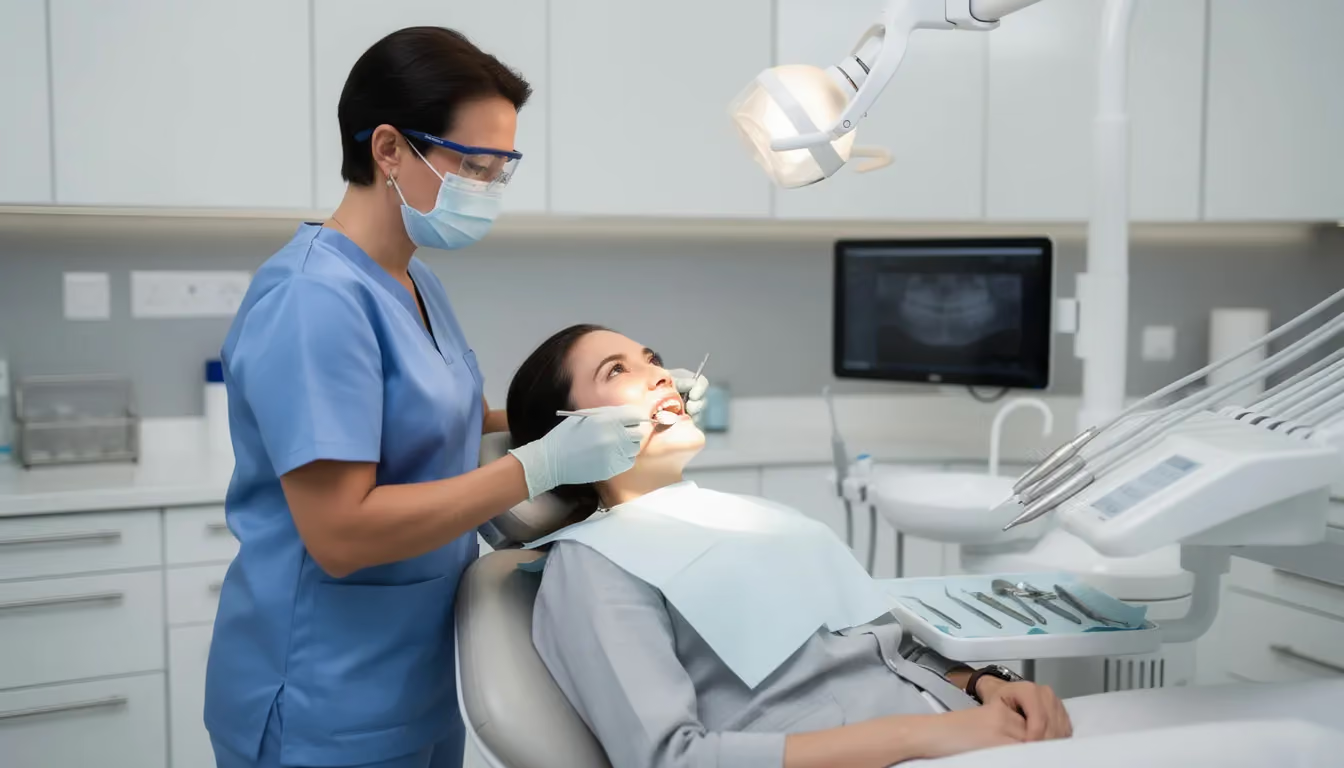
The daily work of assistants and dental hygienists looks very different depending on the role.
Dental assistants complete a wide range of routine tasks:
- Preparing rooms and setting up trays with dental instruments
- Assisting during fillings, crowns, and extractions
- Taking dental X-rays and dental impressions
- Sterilizing dental equipment
- Handling office tasks and front-desk support
Many dental assistants play a major role in workflow efficiency by helping dentists stay on schedule and supporting treatment plans.
Dental hygienists focus on direct clinical practice, including:
- Removing plaque and calculus from patients’ teeth
- Polishing teeth and checking gum health
- Applying fluoride treatments
- Charting findings in patient records
- Providing treatment plans and educating patients about brushing, flossing, and nutrition
This difference in focus is one of the main key differences in the assistant vs dental hygienist comparison.
Education
The paths to becoming a dental assistant or dental hygienist are pretty different in terms of time, cost, and how tough they are.
For dental assistants, some states let you learn on the job with no formal education requirement. Others require you to finish an accredited training program. It's important to choose a program with proper dental accreditation, such as those recognized by the Commission on Dental Accreditation (CODA), to ensure eligibility for certification and licensure. Dental assistant training is a quick, affordable pathway to entry-level positions in dentistry. Most dental assistant programs take 8 to 12 months after high school and cover chairside techniques, dental materials, radiography, infection control, and basic front office tasks. Many programs include an externship where you get hands-on experience in a real dentist’s office. Typically, dental assistants complete these programs and may pursue certification or licensure, depending on state requirements. After finishing a dental assisting program, some assistants go for additional certifications through the Dental Assisting National Board, like the Certified Dental Assistant credential, which can open doors to expanded duties and higher pay.
For dental hygienists, the education path is longer and more demanding. Most states require you to complete a CODA-accredited associate degree in dental hygiene, which typically takes about three years including prerequisites. Before starting a dental hygienist school program, you usually need college-level courses in anatomy, microbiology, chemistry, and communications. The core curriculum covers periodontology, radiology, pharmacology, dental materials, and extensive supervised clinical practice, often exceeding 1,000 hours. All states require dental hygienists to be licensed, but specific requirements vary—states require dental hygienists to meet different educational and examination standards.
After graduation, you’ve got to pass the National Board Dental Hygiene Examination and a regional or state clinical exam to earn your license. Every state requires dental hygienists to hold a valid license before practicing. For those interested in research, teaching, or public health leadership, a dental hygienist degree at the bachelor’s or master’s level is an option.
It’s also worth noting that getting experience as a dental assistant first can be a helpful stepping stone into a dental hygiene program, though it’s not required. Working in a dental office gives you exposure to clinical practice, helps you understand how dental teams work, and can strengthen your application to competitive programs.
Salary
Let's be honest - salary is probably one of the biggest things you're thinking about when you're choosing between these careers. The numbers tell the story, and they really show the difference in what you'll need to learn and what you'll be doing.
If you're looking at the U.S. Bureau of Labor Statistics data from 2023, dental assistants are making a median annual wage of around $46,540. The top earners in this field are pulling in over $61,000, especially if you're in those busy metro areas or working at specialty practices. Your options for licensure and career mobility are also changing for dental professionals in the USA, with new compacts affecting how and where you can work. Your hourly rate and benefits? They're going to vary a lot depending on where you are, what kind of practice you're at, and how long you've been doing this.
Now, if you're thinking about being a dental hygienist, you're looking at considerably more money - we're talking about a 2023 median annual wage of roughly $87,530. If you're an experienced hygienist working in those high-cost areas like California, you could easily be making well above $100,000 per year. That higher paycheck makes sense when you think about it - you're going to school longer, you need to get licensed, and you'll have way more clinical stuff on your plate.
There are a bunch of things that'll affect how much you make in either role: where you live, what kind of practice you're at (maybe a private office versus one of those big DSOs versus specialty), how many years you've been in the field, and whether you've got any extra certifications or expanded functions training under your belt. If you're someone who temps through platforms like Kwikly, you can also use those flexible shifts to bump up your effective hourly earnings or fill in those gaps when things get slow at your regular office.
Where do dental assistants and dental hygienists work?
Chances are, if you’re a dental assistant or dental hygienist, you’re going to end up working in a dentist's office, which is the primary workplace for both roles and central to patient care, treatment preparation, and administrative functions. But don’t worry - there are definitely opportunities beyond your typical dental office if that’s what you’re looking for.
The Bureau of Labor Statistics shows that roughly 90 percent of dental assistants and about 94 percent of dental hygienists are working in dentist offices. You’ve got smaller percentages working in public health clinics, school health programs, correctional facilities, hospitals, and academic institutions. Some hygienists also get into research or work with organizations that focus on community oral healthcare.
Dental assistants can also specialize in areas such as oral surgery with additional training and certification, opening up more career advancement opportunities. The demand for dental assistants is expected to increase as the elderly population ages and requires more dental care. Similarly, the demand for dental hygienists is increasing due to the aging baby boomer population who require more dental maintenance.
No matter where you end up working, both roles have pretty similar workplace characteristics. You’re going to be in clinical environments with strict infection-control measures. Personal protective equipment like masks, gloves, and eyewear? That’s just part of your daily routine. Most offices run on daytime schedules, usually Monday through Thursday or Monday through Friday, though some will add evening or Saturday hours to make things convenient for patients.
Here’s something interesting - a lot of dental hygienists go for part-time or multi-office schedules because they want better work-life balance. It’s way more common for a hygienist to work two or three days per week at multiple practices than it is for an assistant, though both options are definitely out there.
Kwikly fits right into this picture by connecting assistants and hygienists with dental offices across major U.S. metro areas. Whether you want to work in a general practice, pediatric office, or specialty clinic, you can pick shifts that match whatever settings and schedule work for you. If you’re someone who wants variety or you’re still trying to figure out what environment suits you best, temping is a really practical way to explore your options.

Communication skills in dental care
In the world of dental care, strong communication skills are just as important as technical know-how. Whether you’re a dental hygienist or a dental assistant, your ability to connect with patients and work smoothly with the rest of the dental team can make all the difference in a dental office.
Both dental assistants and dental hygienists rely on clear, effective communication every day. From the moment a patient walks in, dental assistants are often the first point of contact—greeting patients, scheduling appointments, and gathering medical and dental history. Explaining what to expect during dental procedures, answering questions, and calming nerves are all part of the job. Many dental assistants find that being able to listen carefully and respond with empathy helps patients feel more comfortable and confident in their care.
Dental hygienists, meanwhile, spend much of their time educating patients about oral hygiene and treatment plans. During a typical appointment, a dental hygienist will explain the steps of a cleaning, discuss findings, and offer personalized advice on brushing, flossing, and maintaining dental health at home. Good communication skills are essential for making sure patients understand their oral health status and what they need to do to keep their teeth and gums healthy.
Dental assisting national board standards and dental hygienist programs both emphasize the importance of communication in patient care. Training covers not just technical skills, but also how to explain complex dental concepts in simple terms, work collaboratively with other dental professionals, and handle sensitive conversations about treatment plans or dental anxiety.
In a busy dental office, assistants and dental hygienists also need to communicate effectively with dentists, front desk staff, and each other to keep things running smoothly. Whether it’s updating patient records, coordinating treatment plans, or discussing a patient’s concerns, teamwork and clear communication are what make high-quality dental care possible.
Ultimately, both dental assistants and dental hygienists agree: strong communication skills are key to building trust, ensuring patients feel heard, and delivering the best possible care. By making communication a priority, dental professionals help create a positive experience for every patient who walks through the door.
How to become a dental assistant or dental hygienist
Both careers start pretty much the same way - you'll need your high school diploma or GED and you should be comfortable with science stuff. After that, though, the paths go in completely different directions.
If you're thinking about becoming a dental assistant, the good news is you can get started pretty quickly. Some states let you learn on the job without any formal training, while others want you to finish an accredited program at a community college, tech school, or private place. Most dental assistant programs cover the basics - chairside techniques, dental materials, taking x-rays, infection control, and some front office work. You're looking at about 9 to 12 months, and most programs hook you up with an externship at a local dental office so you get real experience before you start your actual career.
Once you're done with school, lots of assistants go after extra certifications to bump up their responsibilities and pay. The Dental Assisting National Board has credentials for things like radiology, infection control, and expanded functions. These can really set you apart when you're job hunting and let you do stuff that not every assistant can handle.
Now, if you want to be a dental hygienist, you're looking at more time and schoolwork. Before you can even get into a hygienist program, you'll typically need prerequisite courses in biology, chemistry, anatomy, physiology, and communications. That's about one to two years at a community college or university.
The main dental hygiene stuff includes periodontology, radiology, pharmacology, dental materials, and tons of supervised hands-on practice. After you finish a CODA-accredited program, you've got to pass the National Board Dental Hygiene Examination and a regional or state clinical exam to get your license. Every single state requires you to be licensed before you can work.
If you're not sure which way to go, checking with your state Board of Dentistry is smart. Requirements are all over the place, and local programs can give you the real deal on prerequisites, clinical hours, and how many people actually pass the boards.
Here's something worth knowing: some people start as dental assistants to get experience and make money, then go back to school later to become hygienists. That's totally fine and can actually make things easier since you already know how dental offices work.
How much a dental assistant makes vs how much a dental hygienist makes per hour
Breaking down yearly salaries into hourly rates gives you a better idea of what these dental hygiene jobs actually pay when you're clocking in and out.
For dental assistants, you're looking at somewhere in the low-to-mid $20s per hour nationally. Based on the 2023 BLS median of $46,540 and working your standard 40-hour week, that comes out to roughly $22 to $24 per hour. Of course, that changes based on where you are, what kind of practice you're in, and how much experience you've got.
Dental hygienists are making low-to-mid $40s per hour. With that median annual wage of $87,530, the math works out to around $42 per hour, typically. But here's the thing - lots of hygienists get paid per hour or per day instead of salary, and if you're working part-time or per diem, you might be able to negotiate higher hourly rates since you're not getting guaranteed hours.
Using something like Kwikly lets you see what different offices are paying per hour and pick the shifts that work for you. You know exactly what each shift pays before you say yes, which makes it way easier to decide where and when you want to work.
Workplace
Both dental assistants and hygienists spend most of their day on their feet, moving from room to room. You're working with the same kinds of dental tools and tech - digital x-ray systems, intraoral scanners, and sterilization equipment. Since 2020, infection-control stuff has gotten even more standardized, and both jobs follow pretty much the same PPE requirements.
Most schedules run from around 8 a.m. to 5 p.m. with lunch, though some offices start earlier or stay open later for patients. Part-time schedules and working at multiple practices are way more common with hygienists, but some assistants do this too.
Kwikly makes it easy to try out different workplaces. You can pick up shifts at general practices, pediatric offices, or big DSOs to see what fits you best. Offices can quickly get either role when someone calls out sick or goes on vacation.
Skills
Both jobs need a mix of people skills and technical know-how. Communication and patient education are huge since you're dealing with people who might be nervous or confused about what's happening to their teeth. Working well with dentists, front office people, and each other is what keeps everything running.
Knowing infection control, handling instruments, and being familiar with dental materials - that's essential for both positions. Time management and staying cool when the schedule goes sideways are also critical since dental offices pretty much never go exactly as planned.
Some skills matter more in one job than the other. Dental assistants need to be good at multitasking - you're bouncing between rooms and helping with both clinical stuff and office work. Hygienists focus more on managing patients independently, detailed charting, and making clinical decisions within what they're allowed to do.
These overlapping skills make it pretty smooth for assistants who want to transition into dental hygiene programs later. The foundation and clinical exposure you already have transfers over well.
How to choose between a dental assistant and a dental hygienist career
Picking between dental assisting and dental hygiene really comes down to your personal situation - how fast you want to start working, how you feel about school, what you want to make money-wise, and what kind of work you actually want to do every day. Both paths get you stable, rewarding careers, but they look pretty different day-to-day.
Think about how quickly you want to get going. If you're eager to get into dental care within a year and you like variety in your day, dental assisting might be your thing. If you enjoy the science-heavy coursework, want more independence, and you're okay with investing two to three years in school, dental hygiene could be your path.
Consider what kind of daily work gets you excited. Do you like being in the middle of everything, helping multiple people, and switching between tasks all day? That sounds like dental assisting. Do you prefer focused, one-on-one time with patients and a clear clinical routine? That's more the dental hygiene vibe.
Lots of people start as assistants, get some experience, and then go back to school to become hygienists when their money situation changes or their career goals shift. There's no wrong way to build a career in dental care.
Both jobs show solid projected growth through at least 2032, with good job openings pretty much everywhere. Whatever you choose, you're getting into a field where people actually need what you do.
Evaluate the job duties
Picture yourself in each role for a minute. A dental assistant might start the day getting rooms ready, then spend the morning passing instruments during fillings and crowns, take some x-rays, clean equipment over lunch, and wrap up the day helping the front desk catch up on patient records and scheduling. The variety never stops.
A dental hygienist might see their first patient at 8 a.m. for a cleaning and checking their gums, spend an hour teaching patients about brushing and flossing, move to the next appointment, and repeat that six to eight times throughout the day. The work is focused and clinical.
Which one of these days sounds better to you? If you're not sure, shadowing both a dental assistant and a hygienist for a day or two can give you a much clearer picture before you commit to school.
Compare educational requirements
Time and money are real things to think about. A dental assistant certificate or diploma program usually takes less than a year and costs way less than a dental hygienist degree. You can be working and making money pretty quickly.
A dental hygienist associate degree takes about two to three years, including prerequisites and clinical hours. Tuition costs more, but your long-term earning potential is higher too. Most students pay for hygiene programs with a mix of savings, financial aid, loans, and part-time work. Some even work as dental assistants while in school to get experience and help with costs.
Before you decide anything, contact local schools and ask about specific prerequisites, how long programs take, clinical hours, and how many people actually pass the national boards. Getting the real information upfront helps you make a realistic plan.
Consider salary and lifestyle differences
Think about what you want financially long-term. Hygienists make almost double what assistants make at the median level. Is that income difference worth the extra years of school and student debt for you?
Also think about what kind of schedule you want. Lots of hygienists work part-time by choice, picking up shifts at different offices or using platforms like Kwikly to control their hours. Dental assistants are more often full-time at one office, though flexible arrangements exist.
Both jobs can be combined with temp work to make extra money, check out new offices, or adjust your hours based on what's going on in your life. Benefits like health insurance, retirement plans, and paid time off are all over the place depending on who you work for and aren't guaranteed in either job.

Flexible work as a dental assistant or dental hygienist with Kwikly
Kwikly is the leading dental office staffing agency in the US that connects licensed hygienists and qualified assistants with offices that need coverage. Whether you want to pick up shifts on your own schedule, try out different practice types, or supplement your regular income, Kwikly makes it easy.
Here’s how it works: you create a profile through the Kwikly dental staffing app or website and go through a streamlined vetting and virtual interview process. Once approved, you can browse open shifts in your area, see exactly what each one pays, and accept the ones that fit your schedule. After eligible shifts, you can use Kwikly Wallet for same-day pay so your income is more predictable and flexible.
For dental assistants, Kwikly offers the opportunity to gain experience in different practice types from general offices to pediatric clinics to specialty practices. You can supplement a full-time job, test drive offices before applying for a permanent position or work full-time as a temp with total control over your calendar.
For dental hygienists, Kwikly gives you real schedule control. Choose how many days a week you want to work, pick up higher-paying shifts, cover vacations at offices you love or balance multiple practices without managing everything on your own. Many hygienists use Kwikly to find the work-life balance that full-time employment doesn’t always offer, and some take advantage of Kwikly Plus, which provides flexible positions with added benefits.
Kwikly also supports dental offices and provides temporary staffing solutions for DSOs. Offices can request assistants or hygienists quickly through a simple platform and enterprise clients can centralize staffing, track performance and maintain coverage across multiple locations. Live support is always available to help with scheduling, billing or any questions that come up.
If you’re a dental assistant or dental hygienist looking for more flexibility, Kwikly is worth checking out as part of your career strategy. Whether you’re just starting out or have years of experience, the platform puts you in control of when, where and how often you work.