Table of contents
Get Started with Kwikly
Get the latest updates, insights, and exclusive content delivered straight to your inbox.
Dental assisting is one of the most accessible entry points into healthcare, and it doesn't have to stay entry-level. The dental assistant career path branches into clinical advancement, practice leadership, education, and other corners of dentistry, depending on where you want to go.
Employment of dental assistants is projected to grow faster than the average for all occupations. It's an expanding field, and professionals who understand their advancement options early tend to move faster.
What Dental Assistants Do Day to Day
Before looking at where the dental assistant career path leads, it helps to understand the starting point.
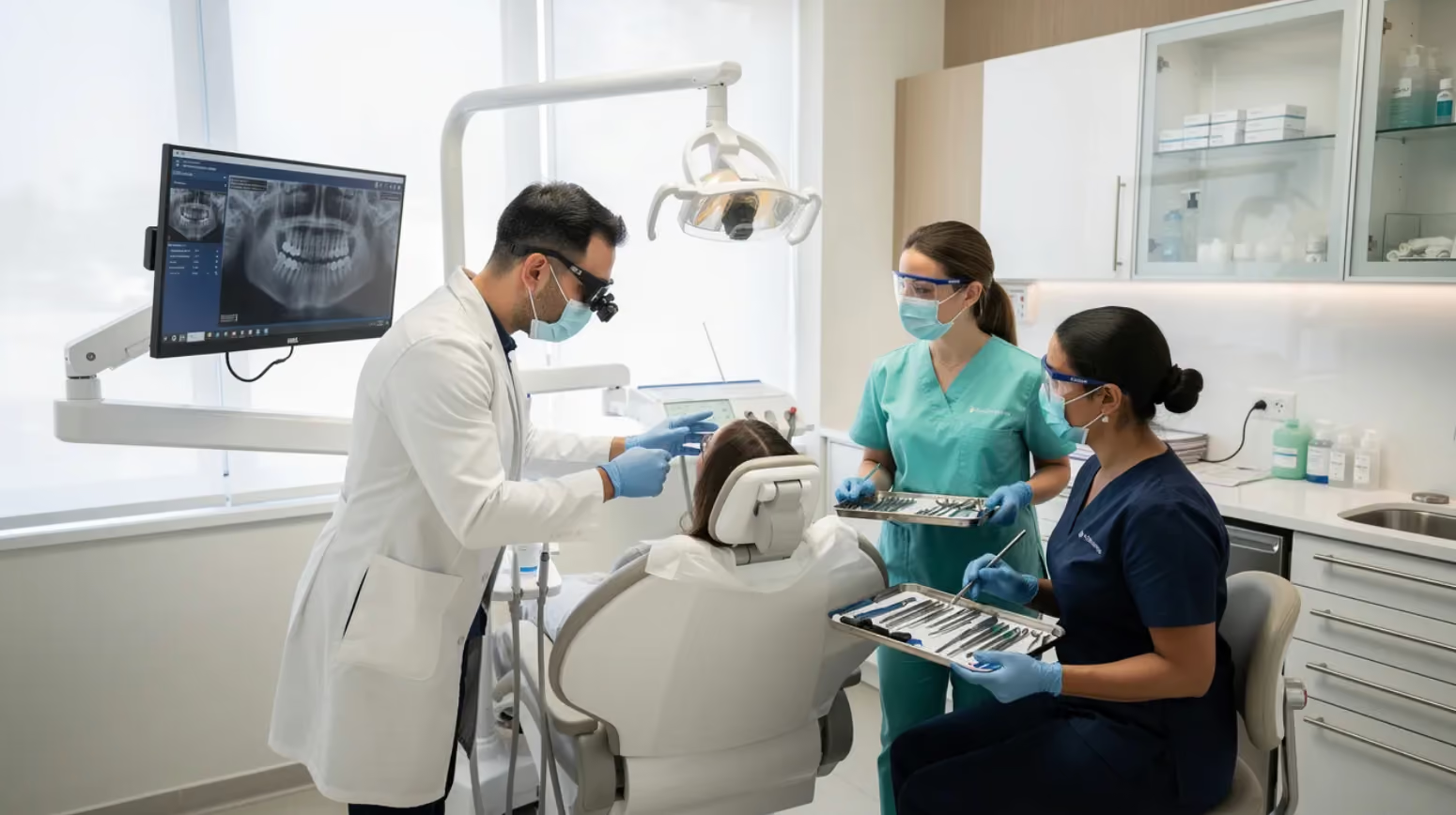
While a dental assistant's primary responsibility is assisting the dentist in preparing and performing treatments, their work spans several areas of the dental office. Dental assistants might work in the lab, at the front desk, or directly with patients, opening the door to specialization and promotion.
On a typical day, that means preparing treatment rooms, passing instruments during procedures, taking X-rays, managing patient records, sterilizing equipment, and handling administrative duties at the front. The mix varies by office, which is part of what makes the role so versatile.
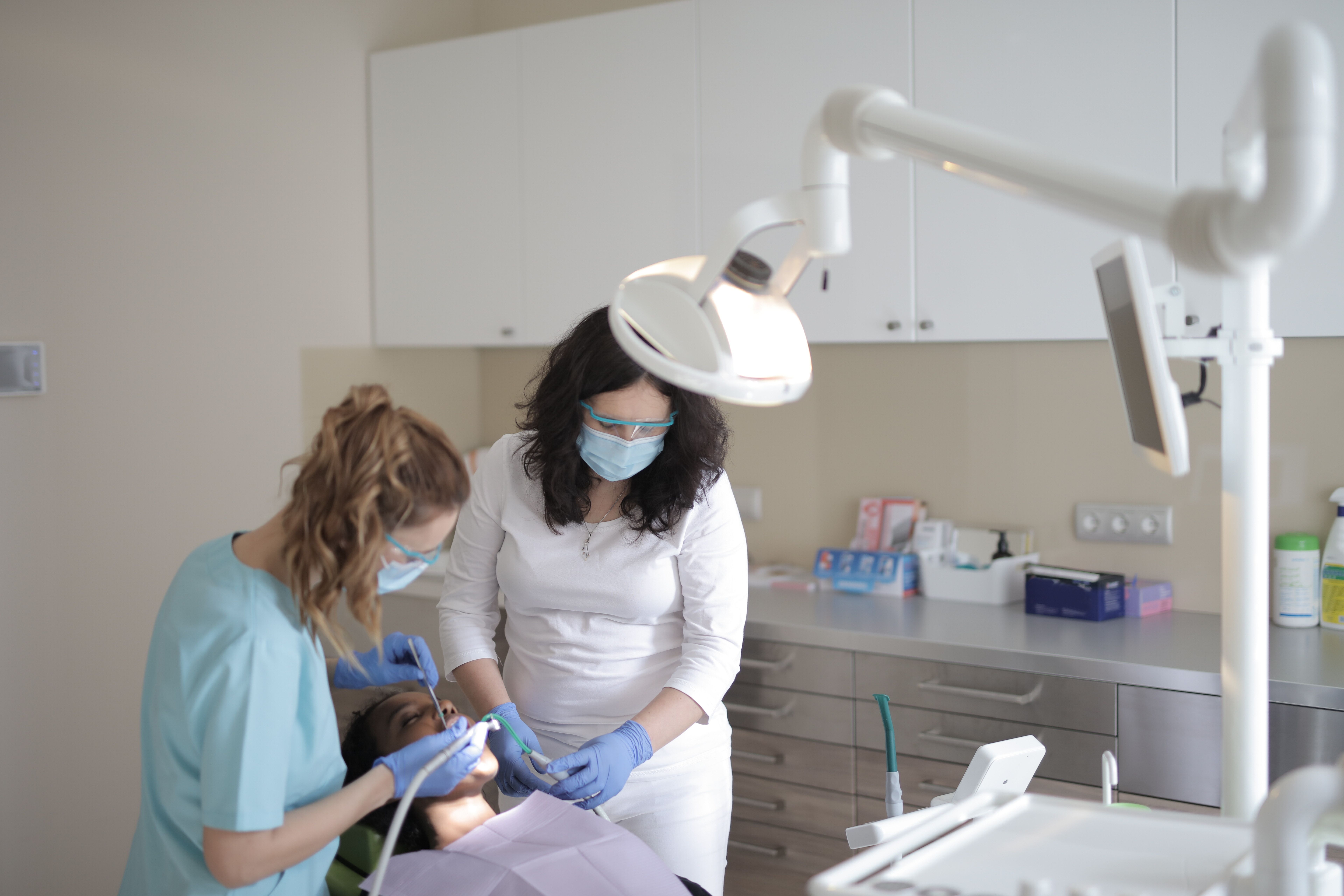
Dental assistants play a direct role in patient care. They're often the first person patients interact with and the last one to check on them before they leave. That direct patient contact builds the clinical instincts and communication skills that more advanced roles depend on.
Formal Training and Certification
Most dental assistant programs run for 9 to 12 months and combine hands-on training with classroom instruction, equipping students with the skills to succeed in a variety of dental settings, including clinics, dental offices, and outpatient facilities.
Accreditation from CODA (Commission on Dental Accreditation) matters. Programs with CODA accreditation meet the standards recognized by employers and licensing boards, and qualify graduates to sit for national certification exams.
The DANB Certified Dental Assistant (CDA) credential is the most widely recognized national certification. According to DANB's 2024 workforce data, Certified Dental Assistants earn a median of $26.00 per hour compared to $22.74 for non-certified assistants, a gap that compounds to roughly $7,280 in additional annual earnings. Certification also improves job stability: non-certified assistants change jobs at a rate of 24 percent per year compared to 14 percent for certified assistants.
If you're considering the dental assistant career path across more than one state, pursuing CDA early makes sense.
Dental Assistant Career Pathways After Chair-side Experience
This is where assistant career paths diverge. The options below represent the most common directions. Some stay clinical, some move into leadership, and some leave the operatory entirely.
Expanded Function Dental Assistant (EFDA)
The most direct clinical upgrade available to a registered dental assistant. EFDAs perform additional tasks chairside, including placing fillings, polishing teeth, and taking dental impressions, all under dentist's supervision. Depending on the state, the title may be LDA, RDA, or RDAEF.
To qualify, complete a CODA-approved program and pass state-specific certification or licensure requirements. The role is in high demand in Ohio, Pennsylvania, and Texas. Median salaries start around $40,000 and can exceed $58,000 with experience.
Dental Hygienist
Many dental assistants transition into dental hygiene. Hygienists work independently with patients on oral health maintenance, performing procedures like scaling and root planing rather than assisting during treatment.
The path requires an associate's or bachelor's degree from a CODA-accredited program plus the NBDHE and state clinical exams, typically two to four years of additional education. The hands-on training and patient care experience from dental assisting provides a real head start. Kwikly connects vetted hygienists with offices across major U.S. markets, and demand for hygienists with clinical backgrounds stays consistently strong.
Dental Office Manager
Dental assistants already move through multiple areas of the office, making practice management a natural next step. Office managers handle scheduling, billing, compliance, HR, and team coordination.
Salaries typically start near $38,000 and reach $62,000 mid-career. Strong communication skills and familiarity with dental office operations matter more than a specific degree, though some practices prefer candidates with a business administration background.
Dental Educator and Training Roles
Assistants who enjoy teaching can move into training roles at community colleges, vocational schools, or continuing education programs. Requirements vary by state, with some programs requiring a bachelor's degree and others accepting substantial clinical experience plus a credential.
These positions build toward leadership roles in curriculum development and program coordination, and offer a way to stay connected to dentistry while shaping the next generation of dental professionals.
Dental Sales
Dental sales representatives help practices source tools, supplies, and equipment, from basic instruments to orthodontic appliances and imaging systems. Former dental assistants perform well in these roles because they understand clinical workflow firsthand.
The career path offers base salary plus commission, performance bonuses, and travel. Clinical knowledge from dental assisting translates directly into credibility with dentists and hygienist customers.
Dental Laboratory Technician
Dental lab technicians fabricate prosthetics, including dentures, implants, and retainers, using X-rays and patient impressions. The work is precise, technical, and doesn't involve direct patient care.
This is a good direction for assistants who prefer a lab environment. Specializations include dental ceramist and orthodontic lab technician, both of which offer solid career growth within the dental field.
Specialty Practice Roles
Rather than moving into management or education, some dental assistants build a career within a specific branch of dentistry. Common paths include orthodontics, where assistants apply braces, adjust orthodontic appliances, and take impressions; oral surgery; endodontics; periodontics; and pediatric dentistry.
Oral surgery and orthodontics tend to pay above the median. Specialty experience deepens clinical knowledge and strengthens the foundation for further advancement.
Pathway Toward Dentistry
For assistants with long-term ambitions, dental assisting can be a genuine stepping stone toward becoming a dentist. The path requires a bachelor's degree, dental school, and licensure, but the clinical exposure and direct patient care experience from assisting accelerate preparation and, for many, are what spark the goal.
The Bureau of Labor Statistics reported a median annual wage of $179,210 for dentists in May 2024.
Earnings Across Dental Assistant Career Pathways
Sources: Bureau of Labor Statistics, DANB 2024 Salary and Satisfaction Survey.
How to Move Forward on Your Dental Assistant Career Path
Career advancement in dental assisting doesn't happen automatically. A few things accelerate it:
- Earn the CDA certification through DANB if you haven't already. It raises pay, improves job stability, and qualifies you for expanded roles
- Identify which direction interests you early, then pursue additional training aligned with that path
- Research your state's EFDA laws. Scope varies significantly, and knowing the ceiling in your market helps you plan
- Use temp and flexible shift work to gain hands-on experience across different practice types, including specialty offices
Platforms like Kwikly connect vetted dental assistants and hygienists with dental offices in major markets, making it easier to build clinical exposure across DSOs such as Heartland Dental and Smile Brands, private practices, and specialty offices, all while offering flexible scheduling that accommodates continuing education.
Getting Started
The first step is to complete an accredited dental assistant program and earn your credentials. Confirm that your program holds CODA accreditation, research your state's EFDA scope early, and consider the broader dental field when choosing where to gain your first experience.
Once you're licensed, platforms like Kwikly make it straightforward to connect with offices. Create a profile, complete the vetting process, and start building the hands-on experience your next step requires.
The dental assistant career is a rewarding profession and a strong foundation for healthcare careers that reach far beyond the entry-level role where most people begin.