Table of contents
Get Started with Kwikly
Get the latest updates, insights, and exclusive content delivered straight to your inbox.
Key Takeaways
- Big states like Texas, California, and Florida are dealing with serious dentist shortages, and that means millions of people can’t get the dental care they need.
- Health Professional Shortage Areas (HPSAs) help us figure out where the problems are worst - turns out about 67% of rural areas don’t have enough dental care.
- Key findings show that states with the largest populations, such as Texas, California, and Florida, are most affected by dentist shortages, leading to significant disparities in dental care access.
- Fixing this isn’t simple. We need better education programs, financial incentives, and new tech like telehealth to really make a difference.
Some states in the U.S. are really struggling with dentist shortages, and if you’re living in one of these areas, you probably know how tough it can be to get dental care. This article breaks down which states are hurting the most, why this is happening, and what it means for people like you.
The shortage of dentists poses a significant challenge for dental medicine, affecting access to care and public health nationwide.
Identifying States with Dentist Shortages
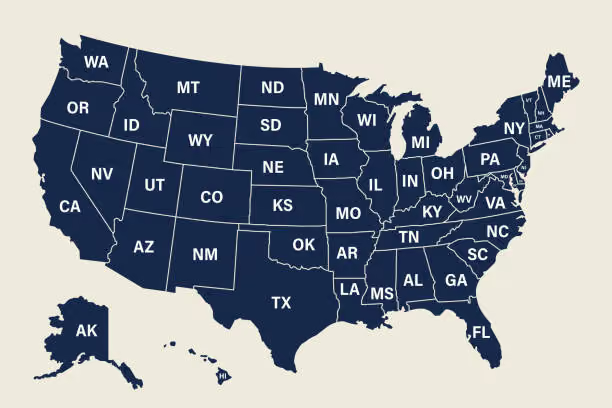
If you’re trying to find a dentist and it feels impossible, you’re not alone. The shortage of dentists is real, and some states have it worse than others. Texas, California, and Florida are at the top of the list for states where finding dental care is a real challenge. These places have huge populations, but not nearly enough dentists to take care of everyone.
You might have heard the term ‘dental deserts’ - that’s what we call areas where there just aren’t enough dentists around. It’s not just inconvenient; it’s actually dangerous for your health. Limited accessibility is a key issue in these dental deserts, making it much harder for people to get the care they need.
In some states, there’s only one dentist for every 5,000 people. Think about that for a second. That means you might have to drive for hours or wait weeks just to get your teeth cleaned. In fact, some states would require a significant number of additional dentists to reach an optimal provider-to-population ratio. For about 1.7 million Americans, getting dental care is a real struggle. And here’s the thing - if you can’t take care of your teeth, it can lead to heart disease, diabetes, and even problems during pregnancy.
We need to identify areas where these shortages are happening so we can actually do something about them. Once we figure out which areas need the most help, we can start working on getting more dentists there with things like financial incentives and better training programs.
Factors Contributing to the Shortage
The dental shortage in this country is real, and it's making life tough for millions of people who just need basic dental care. Here's the thing - we don't have enough dental schools, especially outside the big cities. Most communities can't get new dentists because there simply aren't enough coming out of school. The Health Resources and Services Administration says we need more than 10,000 additional dentists nationwide. That's a lot of empty chairs.
You probably already know this if you live in certain states. Places like Alaska, North Dakota, and Arkansas? They've got it rough. Huge chunks of their populations are living in what experts call dental deserts. No dentists for miles. Meanwhile, if you're in Connecticut or Delaware, you're pretty much set. The National Institute on Minority Health and Health Disparities has been tracking this stuff, and here's what they found: most dentists want to work in cities. Can't blame them, but it leaves rural areas and small towns with basically nothing.
Money's a big part of the problem, too. You can't run a dental clinic without resources, and you can't attract good dentists without decent pay and facilities. When funding's tight, everything falls apart. The Services Administration keeps saying we need more investment in dental care infrastructure. And here's the kicker - when people can't get dental care, it messes with way more than just their teeth. We're talking serious health problems, mental health issues, the whole deal.
So what can we do about it? First off, we need to give dentists real reasons to work in these shortage areas. Loan repayment programs, financial incentives, support for continuing education - stuff that actually makes a difference. We can also let dental hygienists and dental therapists do more. Why not? If they can handle basic services, that helps everyone. And then there's the tech stuff - telehealth, mobile dental clinics. These things are already working in some remote communities.
Want to know where the problems are worst? Check out the HPSA designations and the HPSA Find tool. This data shows you exactly which areas are hurting the most. California, Texas, and New York have already figured out some smart ways to get more dentists into underserved areas. Other states can learn from what they're doing instead of starting from scratch.
Fixing this dental shortage isn't going to be easy. You need the federal and state governments working together. You need healthcare organizations on board. Everyone's got to pitch in to expand dental education, create real incentives, and come up with new solutions that actually work. But if we use the data we have and share what's working, we can fix these disparities. Everyone deserves decent dental care, no matter where they live. That's not asking for much.

HRSA Designations and Dental HPSAs
The Health Resources and Services Administration (HRSA) is the group that figures out where we need more dental professionals. They designate something called Health Professional Shortage Areas (HPSAs), and these designations matter because they help direct money and resources to places that need them most. Areas become designated HPSAs when they are found eligible based on federal criteria, such as specific population-to-provider ratios for dental care. HPSA designations are often determined at the county level, with each county evaluated for shortages according to these ratios. HRSA reviews and updates these designated HPSAs every year, with new data typically released in March and designations updated or withdrawn around July to ensure they’re focusing on the right spots.
If you work at a federally qualified health center, you automatically qualify as a dental HPSA. That’s actually pretty helpful because it means these facilities can get federal support to keep their doors open. In addition to federal funding, staying compliant with U.S. dental tax and labor regulations is also crucial for dental practices.
Here’s a number that might shock you: about 67% of rural areas are designated as Dental Health Professional Shortage Areas. That’s a lot of places where people are struggling to find dental care. Understanding how HRSA works helps us see where efforts are being made and whether they’re actually making a difference.
Rural vs. Urban Disparities in Dental Care
If you live in a rural area, you probably already know how hard it can be to find a dentist. About 63 million Americans live in places where dental care is tough to come by, and more than 30% of rural areas just don’t have enough dental services. North Dakota is particularly rough - some areas have almost no dental providers at all.
Cities usually have better access, though it’s not perfect everywhere. In Oregon, many counties are classified as Dental Health Professional Shortage Areas, which means getting dental care is especially challenging. Recent maps have been used to visualize and analyze these gaps in dental care access, highlighting dental deserts and shortages at a granular level. Here’s what that looks like:
- Rural areas just don’t have enough dentists and other dental practitioners.
- Some counties don’t have any full-time practitioners at all.
- The ratio can be as low as 0.5 dentists per 1,000 people - way lower than what you’ll find in cities.
- If you live in a rural area, you might have to drive for hours to see a dentist, if you can get an appointment at all.
And here’s something that makes it even worse: 34% of people in rural areas don’t have dental insurance, compared to 29% in cities. Rural employers are also less likely to offer dental insurance, so even if you want coverage, you might not be able to get it through work.
The result? About 40% of adults in rural areas haven’t seen a dentist in over a year, compared to 35% in urban areas. That’s a big gap, and it shows why we need targeted solutions for rural communities.
Southern States Facing Critical Shortages
The South is really struggling with dental shortages. Mississippi has 148 designated Dental Health Professional Shortage Areas and needs 178 more dentists to fix the problem. That’s a huge gap. Alabama isn’t much better - they have 89 designated shortage areas, which tells you how widespread this problem is.
Arkansas has 132 dental professional shortage areas identified. States like Georgia and Tennessee are dealing with the same issues - not enough dentists and not enough resources to attract and keep dental professionals in the area.
Even states like Massachusetts are having to come up with new strategies to recruit and retain dentists. These southern states really need targeted approaches to get more dental professionals where they’re needed most.
Strengthening the health workforce in these southern states is essential to address ongoing provider shortages and ensure underserved communities have access to care.
Western States with Growing Dental Needs
If you’re in the western U.S., you’ve probably noticed that more people are moving to your area. States like California and Washington are seeing population booms, and that means more people need dental care. The problem is, the number of dentists isn’t keeping up with the number of new residents. A recent study highlights the growing demand for dental care in these states and points to a shortage of dentists, especially in rapidly expanding communities.
These states are trying to get ahead of the problem by expanding dental education programs, offering incentives for dentists to work in underserved areas, and using technology to make dental care more accessible. It’s a proactive approach, which is good because waiting until the problem gets worse isn’t an option.
Northern States Struggling with Limited Resources
Northern states like North Dakota face their own unique challenges. Only about 44% of dental care needs are being met in North Dakota. That's pretty shocking when you think about it. People are ending up in emergency rooms for tooth pain - over 1,700 visits in 2021 alone. That's not where you want to go for dental problems, but sometimes it's the only option.
North Dakota is trying to fix this by adding dental coverage to their Medicaid Expansion program, which could help low-income residents get the care they need.
But it's tough up there. The climate is harsh, and many areas are very rural, which makes it hard to recruit and keep dental professionals. They need a comprehensive approach that includes policy changes, financial incentives, and targeted recruitment efforts.
Solutions to Address Dentist Shortages
Fixing the dentist shortage isn’t going to be simple, but there are things we can do. We need better educational opportunities, financial incentives, and we need to expand what dental professionals can do. Here’s what that looks like:
- Increasing educational opportunities
- Expanding dental school capacity to attract and train more students
- Incentivizing practice in underserved areas
- Expanding the roles of dental professionals
If we tackle this from multiple angles, we can make real progress on this issue.
Expanding Dental Education Opportunities
We need more dental schools and bigger class sizes. It's that simple. Here's what's happening:
- More accredited dental programs are opening up.
- Existing schools are expanding their class sizes to graduate more dentists.
- Policy reforms are making dental education more accessible.
- There's more support for programs that focus on underserved areas.
Dental schools are also working more closely with community health organizations to strengthen workforce development in high-need areas. They're also focusing on recruiting from diverse backgrounds, including low-income and Native American populations, to create a more inclusive dental workforce.
Loan Repayment and Incentive Programs
If you're a dentist willing to work in an area that doesn't have enough dental care, there are federal and state programs that will help pay off your student loans. These programs are designed to get dentists where they're needed most.
Oregon has financial incentives and loan repayment programs specifically to attract dental professionals to underserved areas. It's a win-win - dentists get help with their loans, and communities get the dental care they need.
Enhancing Scope of Practice for Dental Hygienists
One way to help with the dentist shortage is to let dental hygienists do more. If hygienists can perform a wider range of procedures, it takes some pressure off dentists and makes dental care more accessible, especially in areas where there aren't many dentists.
This approach is particularly helpful in underserved regions where every bit of additional capacity matters. When hygienists can do more preventative and basic care, it creates a more efficient system that better serves everyone.
The Role of Telehealth in Improving Access
Telehealth is changing the game for dental care, especially in rural and underserved areas. In Oregon, teledentistry allows expanded practice dental hygienists to provide care remotely. This cuts down on travel costs and appointment delays, making dental care more accessible for people in remote locations.
With telehealth, dentists can connect with patients through secure video calls, which saves time and office resources. When you combine this with giving dental hygienists more authority to perform procedures, you can significantly improve access to dental care for people who might otherwise go without.
Kwikly: A Modern Solution for Dental Staffing
Kwikly is changing how dental offices find qualified professionals. If you're a dental office dealing with staffing shortages, or if you're a dental professional looking for flexible work, Kwikly makes the connection simple. We operate nationwide in all major metropolitan areas across the United States.
Our platform lets dental offices find and schedule vetted dental staffing hygienists and assistants in real time. If you're an office facing sudden staffing shortages or you just need temporary help, Kwikly ensures your patient care doesn't get interrupted.
If you're a dental professional, Kwikly gives you control over your work schedule, and you can get same-day payouts through the Kwikly Wallet. Whether you're looking for full-time temping opportunities or just some extra income, our platform makes it straightforward with built-in shift details and directions. Offices can review your profile before scheduling shifts, so there's a good match for everyone.
Major dental service organizations like Heartland Dental and Smile Brands trust Kwikly. We're not just filling shifts - we're changing how dental professionals and dental offices connect and work together. Our technology and user-friendly interface make sure both dental offices and professionals can reach their goals efficiently.
The Future of Dental Workforce Development
The future of dental workforce development is all about innovation and technology. We need over 10,000 more dental professionals in the U.S. to address current shortages. That's a big number, but it's achievable if we use innovative strategies like expanding education, offering financial incentives, and using technology to work more efficiently.
Artificial intelligence (AI) and automated tools are going to play a big role in addressing dentist shortages. AI in teledentistry helps with accurate diagnosis and treatment predictions, and it streamlines patient workflows so dental practices can work more efficiently.
Technologies such as AI-powered scheduling and patient interactions can significantly improve how dental practices operate, allowing dental professionals to focus more on patient care and less on administrative tasks. If we embrace these advances, the dental industry can better meet growing demand and ensure everyone has access to quality dental care.
Summary
The dentist shortage in the United States is real, and it affects millions of people. By figuring out which states and regions are hit hardest, we can better allocate resources and implement targeted strategies to improve dental care access. HRSA and HPSA designations are crucial for directing funding and resources where they're needed most. We need to address the gaps between rural and urban areas, as well as the specific challenges faced by different regions.
Solutions like expanding dental education, offering loan repayment programs, and enhancing what dental hygienists can do are critical. Modern solutions like telehealth and innovative staffing platforms like Kwikly are making real progress in improving dental care access. If we embrace these strategies and technological advances, we can work towards a future where everyone can get dental care, no matter where they live or what their financial situation is.
Frequently Asked Questions
What are Health Professional Shortage Areas (HPSAs) and why are they important?
Health Professional Shortage Areas (HPSAs) are designations that identify regions that don't have enough healthcare professionals. They're important because they guide resources and funding to improve access to necessary healthcare services where people need them most.
How do rural and urban areas differ in terms of dental care access?
Rural areas typically have much bigger challenges getting dental care than urban areas. Over 30% of rural regions don't have adequate dental services, and rural residents are more likely to be uninsured and have to travel longer distances to reach dental providers.
What strategies are being implemented to address the shortage of dentists?
There are several strategies being used to address the dentist shortage: expanding dental education, implementing loan repayment and incentive programs, and enhancing what dental hygienists can do in their practice. These approaches aim to boost the dental workforce and improve access to care, particularly in underserved regions.
How does telehealth improve dental care access?
Telehealth improves dental care access by enabling remote consultations through secure video calls. This minimizes travel costs and appointment delays for patients, particularly in remote and underserved areas, making dental care accessible to more people.
What is Kwikly, and how does it help address dental staffing shortages?
Kwikly is a dental staffing platform that addresses staffing shortages by connecting dental offices with qualified professionals quickly and efficiently. Our user-friendly scheduling interface and same-day payout feature provide flexibility and reliability, ensuring continuity of patient care.