Table of contents
Get Started with Kwikly
Get the latest updates, insights, and exclusive content delivered straight to your inbox.
Highest Paying Dental Specialties in 2026
If you're thinking about your next move in the dental world, knowing where the money is can help you plan smarter. This guide breaks down the highest-paying dental specialties in 2026, so you can see real salary ranges, what training you'll need, and what your day-to-day work actually looks like.
The top earners in dentistry right now? You're looking at oral and maxillofacial surgery, dental anesthesiology, orthodontics, prosthodontics, endodontics, pediatric dentistry, and periodontics. General dentists typically pull in between $180,000 and $260,000 per year, while dental specialists often make 20% to 100% more, depending on where you're working and what kind of practice you're in. These numbers are national estimates, and they'll shift based on your state, metro area, and whether you're in private practice, a DSO, or academia. Beyond pay, you've got to think about lifestyle and workload too. Platforms like Kwikly let hygienists and assistants pick up flexible shifts to boost their income without locking into a single specialty path.
Oral and Maxillofacial Surgery
Oral and maxillofacial surgeons stay at the top of the earning game in dentistry. You can expect a 2026 range of roughly $300,000 to $550,000 per year, with top performers in high-demand areas pulling in over $600,000.
These surgeons handle the complex stuff - extractions, jaw realignment, facial trauma, pathology removal, and dental implants. The training's intense though: four years of dental school followed by a 4 to 6 year hospital residency. Many programs also give you an MD degree. What drives the high pay? Hospital privileges, call coverage stipends, and working where oral surgeons are hard to find. The trade-off? Long training, and you'll be on-call regularly.
Dental Anesthesiology
As a dental anesthesiologist, you can expect $280,000 to $480,000 per year in 2026. Remote areas like Alaska report even higher numbers because there just aren't enough of these professionals around.
You're the one who administers IV sedation and general anesthesia for complex procedures, treating patients with severe anxiety or special needs. Training means a 2 to 3-year residency after dental school. You'll work in hospital ORs, surgery centers, and large group practices. Supporting full-arch implant cases across multiple offices makes this specialty essential for high-production surgical days.
Orthodontics
Strong Demand Across All Ages
Orthodontists earn about $250,000 to $450,000 per year, with practice owners often going way past that range. There are over 3,200 job openings nationwide right now.
Your daily work includes diagnosing misaligned jaws, placing braces, and managing clear aligner therapy. You'll need a 2 to 3 year residency after dental school. The specialty gives you predictable clinic hours with limited emergencies. What affects your income? Fee structures, whether you're associated with DSOs, and if you own multiple locations.
Prosthodontics
Complex Restorative and Cosmetic Revenue
Prosthodontists do crowns, bridges, dentures and implant-supported restorations. 2026 salary range is $220,000 to $380,000, cosmetic practices earn more.
They manage full arch reconstructions and work with oral surgeons and periodontists. Training is 3 year residency focused on treatment planning and lab communication. Income drivers are complex case fees and referrals from general dentists who lack advanced restorative skills.
Endodontics
Endodontist earn around $230,000 to $360,000. California endodontists average $444,000, big geographic variation.
They do root canals, re-treatments and apicoectomies. They handle emergencies from pulp infections and cracked teeth. Training is at least 2 years of residency focused on microsurgery and advanced imaging. Fast-paced schedule with many same-day emergency visits, but strong hourly pay makes it worth it.
Pediatric Dentistry
Pediatric dentists earn around $210,000 to $340,000. Those with hospital privileges in underserved markets can exceed this range.
Work involves infant oral exams, behavior management, and collaboration with anesthesiologists for OR cases with children. A 2-year residency covers child psychology and special needs care. Fewer late night emergencies than medical pediatrics, but the work requires patience and comfort with anxious parents.
Periodontics
Periodontists earn $200,000 to $340,000 nationally, implant heavy practices earn more.
Services include treating periodontal disease, regenerative surgeries, soft tissue grafting and implant placement. 2 to 3 year residency after dental school. They work closely with general dentists and prosthodontists, get referrals for advanced gum disease. Income varies based on mix of insurance based therapy vs fee for service surgical work.
How to Choose the Right Dental Specialty
Pay matters but career satisfaction and lifestyle matter just as much. Consider your strengths: do you like surgery, working with children or esthetic cases?Shadow specialists during dental school and talk to recent graduates. Factor in training length and educational debt. An oral surgery track means 12+ years of education. Also consider practice settings like solo ownership versus DSO employment. Some dentists stay in general dentistry and use flexible staffing to boost income without specializing.
Best-Paying States and Markets in 2026
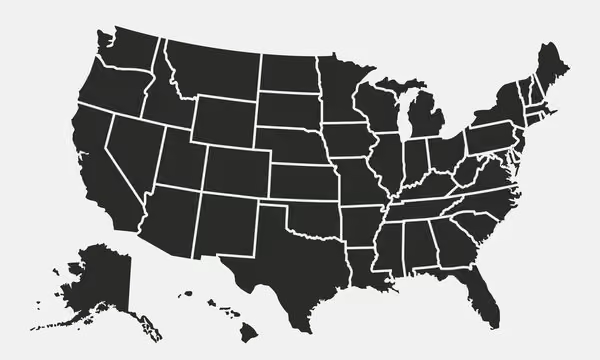
Location can shift earnings by tens of thousands annually. California, Alaska, Washington and Massachusetts pay highest for dental specialists.
High cost metros like San Francisco offer top nominal salaries but weigh take home pay against housing costs. Rural markets in the Midwest and Mountain West may offer signing bonuses and loan repayment due to provider shortages. DSOs with multiple locations provide relocation flexibility across different states.
Practice Settings, DSOs, and Flexible Work
Where you work affects pay as much as your specialty. Private practice owners have the highest upside but more risk. DSO associates get strong production incentives plus benefits.
Large DSOs are increasingly hiring specialists on flexible schedules, rotating among offices. Dental professionals not ready for ownership can explore different settings while maintaining income. Kwikly helps practices keep schedules productive by matching them with vetted hygienists and assistants, supporting higher daily production for everyone.
Strongest Specialties for the Next Decade
Most dental specialties show modest growth through 2034. An aging population retaining natural teeth drives demand for oral surgery, endodontics, and periodontics.
Cosmetic treatments and clear aligners fuel the growth of orthodontics and prosthodontics. Pediatric dentistry benefits from an emphasis on early childhood oral health. Rural and underserved areas offer higher salaries and loan repayment for specialists willing to relocate.
How Hygienists and Assistants Fit In
While this guide focuses on dentist earn potential, hygienists and dental assistants are critical to specialty office productivity. Periodontists rely on hygienists for maintenance visits. Assistants support oral surgery, endodontics, and orthodontics daily.
When specialists staff reliably, they run fuller schedules. Kwikly provides vetted hygienists and assistants on demand, helping offices avoid cancellations and lost production.
Flexible Work and Smart Planning
There is no one right path. Some pursue long residency training while others optimize income through efficient scheduling and flexible work. Pick a specialty that fits you. Practice in areas with good pay-to-cost. Kwikly lets hygienists and assistants choose extra shifts and office types. See your career as a journey. Income, impact, life balance – what’s your mix?